
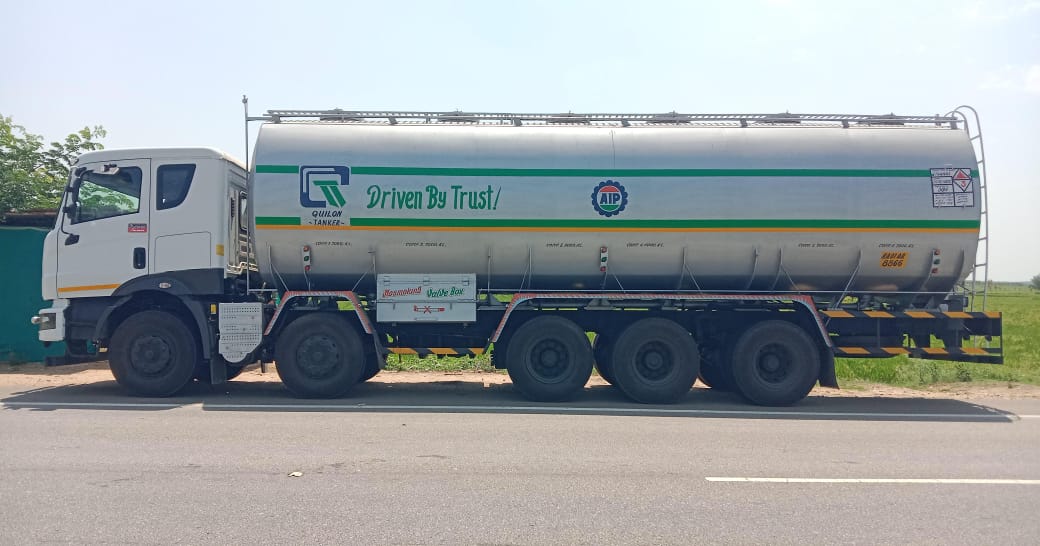
How-To-Choose-Bulk-Liquid-Transporter-India
For industries that regularly move chemicals, petrochemicals, liquid raw materials, edible oils, fertilisers and other bulk liquids, transportation is an important part of the supply chain.
A delay in tanker availability can affect production schedules. An unsuitable tanker can create cargo compatibility or contamination issues. Poor communication can make it difficult to manage delivery schedules. And inadequate safety practices can create risks for people, cargo and the environment.
This is why choosing a bulk liquid transporter in India should involve more than comparing freight rates.
The right logistics partner should have the appropriate tanker fleet, operational experience, safety systems, trained personnel, technology and geographic reach to meet the customer’s requirements consistently.
This guide explains 10 important factors businesses should consider before selecting a bulk liquid transportation company in India.
Looking for a broader introduction to bulk liquid logistics? Read our guide to [Bulk Liquid Transportation in India: A Complete Guide for Industries].
1. Does the Transporter Have the Right Type of Tanker?
The first question to ask is whether the logistics provider has tankers that are suitable for your specific cargo.
Bulk liquids can have very different transportation requirements.
Factors that may influence tanker selection include:
- Chemical composition
- Concentration
- Corrosiveness
- Viscosity
- Temperature
- Product sensitivity
- Required capacity
- Loading method
- Unloading method
- Applicable safety requirements
A tanker suitable for one product may not necessarily be appropriate for another.
For chemical and industrial cargoes, tanker compatibility should therefore be assessed before a vehicle is assigned.
The transporter should be able to understand your cargo requirements and provide an appropriate tanker rather than simply allocating whichever vehicle happens to be available.
2. Does the Company Have Relevant Industry Experience?
Experience matters significantly in bulk liquid logistics.
Moving liquid cargo requires an understanding of tanker operations, loading and unloading procedures, cleaning requirements, route planning and the practical challenges associated with long-distance transportation.
This is particularly important when transporting chemicals.
A logistics company with experience in chemical tanker transportation is more likely to understand the importance of cargo compatibility, tanker cleanliness, safe handling and communication between the loading and receiving facilities.
When evaluating a transporter, ask:
- What types of liquid cargoes do they regularly handle?
- Do they understand the requirements of your industry?
- Do they have experience with similar routes?
- Can they provide references or demonstrate a track record of reliable service?
Experience can be difficult to measure purely through a quotation, but it can make a substantial difference to operational reliability.
3. Evaluate the Company’s Safety Standards
Safety should be one of the most important criteria when selecting a bulk liquid transporter.
This becomes especially important when transporting hazardous or sensitive chemicals.
A professional tanker logistics company should have systems covering areas such as:
- Vehicle inspection
- Preventive maintenance
- Driver training
- Safe loading
- Safe unloading
- Cargo handling
- Emergency response
- Route planning
- Documentation
- Equipment inspection
A company may offer a competitive freight rate, but if its safety practices are inadequate, the apparent saving can quickly become insignificant compared with the consequences of an accident, cargo loss or operational disruption.
When evaluating a transporter, ask about their safety processes rather than simply asking whether they are “safe.”
4. Look at the Condition and Maintenance of the Fleet
The condition of the tanker fleet is another important consideration.
A tanker travelling thousands of kilometres across India needs to be properly maintained.
Regular inspection and preventive maintenance should cover critical components such as:
- Braking systems
- Tyres
- Suspension
- Lights
- Tank body
- Valves
- Hoses
- Connections
- Pumps, where applicable
- Safety equipment
Preventive maintenance can reduce the likelihood of breakdowns and unexpected delays.It also helps protect the cargo and contributes to safer transportation.When selecting a road tanker transportation company, businesses should look beyond the number of tankers owned and consider the quality and maintenance standards of those vehicles.
5. Check Geographic Coverage
A logistics partner may be excellent for local transportation but may not have the operational capability to manage long-distance movements.
This matters when your supply chain extends across multiple states.
For example, a manufacturer based in South India may need to transport liquid cargo to customers in Maharashtra, Gujarat, Chhattisgarh or other parts of India.
In such cases, the transporter should have the operational capability and network to manage these movements consistently.
For businesses based in South India, relevant transportation corridors may include:
Tamil Nadu ? Maharashtra
Tamil Nadu ? Gujarat
Karnataka ? Maharashtra
Andhra Pradesh ? Maharashtra
Telangana ? Gujarat
South India ? Chhattisgarh
The exact routes will depend on the customer’s manufacturing locations and customer base.
A transporter with a broader geographic capability can also make it easier for a growing manufacturer to expand into new markets without having to find a new logistics provider for every region.
6. Assess Vehicle Availability and Reliability
A transporter may have an impressive fleet on paper but still struggle to provide vehicles when customers need them.
For industries with regular production schedules, tanker availability can be just as important as freight pricing.
Consider:
- How quickly can vehicles be deployed?
- Does the transporter maintain dedicated capacity?
- Can they handle recurring movements?
- How are urgent requirements handled?
- What happens if a vehicle becomes unavailable?
- Does the company have backup capacity?
For customers with predictable transportation requirements, dedicated tanker operations can provide greater consistency and help reduce uncertainty around vehicle availability.
A logistics partner should be capable of scaling transportation capacity as the customer’s requirements increase.
7. Ask About GPS Tracking and Shipment Visibility
Modern logistics is increasingly based on visibility.
When a tanker carrying valuable or sensitive cargo is travelling across the country, customers want to know where the vehicle is and when it is expected to arrive.
GPS tracking can provide visibility into:
- Current vehicle location
- Route progress
- Estimated arrival
- Unplanned stops
- Transit delays
- Trip history
For logistics and supply-chain teams, this information can help coordinate production, unloading and inventory planning.
When comparing bulk liquid transporters in India, ask what type of tracking and shipment updates they provide.
Technology should not replace communication, but it can make communication more accurate and timely.
8. Understand the Transporter’s Approach to Tanker Cleaning
Tanker cleaning is particularly important when the same vehicle may transport different liquid products.
Residual material from a previous cargo can contaminate the next cargo or, in some situations, react with it.
A professional tanker logistics operation should have a clear approach to cleaning based on:
- Previous cargo
- Next cargo
- Product characteristics
- Tanker material
- Customer requirements
- Applicable cleaning procedures
For chemical and food-grade transportation, cleaning can be an important part of quality assurance.
Customers should therefore understand how the transporter manages tanker cleaning and cargo segregation before awarding regular transportation contracts.
9. Evaluate Communication and Customer Service
Bulk liquid transportation involves multiple parties:
Customer ? Loading Facility ? Transporter ? Driver ? Receiving Facility
A breakdown in communication at any stage can result in delays.
Good logistics communication should provide customers with timely information regarding:
- Vehicle placement
- Loading status
- Departure
- Transit progress
- Delays
- Estimated arrival
- Delivery
- Unloading
- Proof of delivery
This becomes particularly important during long-distance transportation.
No logistics operation is completely immune to traffic, weather, breakdowns or delays at loading and unloading facilities.
What distinguishes a reliable transporter is often how quickly and transparently they communicate when something changes.
10. Look Beyond the Freight Rate
Freight rate is obviously an important consideration when selecting a logistics provider.
However, choosing a transporter solely on the basis of the lowest quotation can sometimes increase the overall cost of logistics.
Consider the total cost of transportation, including:
- Freight
- Waiting time
- Loading and unloading delays
- Vehicle turnaround
- Empty return kilometres
- Breakdowns
- Delivery delays
- Cargo contamination
- Administrative effort
- Communication and coordination
A slightly higher freight rate may provide better overall value if it comes with more reliable service, better vehicle availability, stronger safety practices and improved shipment visibility.
The objective should be to achieve the lowest total logistics cost, rather than simply the lowest quoted freight.
Questions to Ask a Bulk Liquid Transporter Before Hiring Them
Before finalising a logistics partner, procurement and supply-chain teams can ask a few straightforward questions.
About the fleet
- What tanker types and capacities are available?
- Are tankers suitable for our specific cargo?
- How frequently are vehicles inspected and maintained?
About safety
- What safety procedures are followed?
- How are drivers trained?
- What emergency procedures are in place?
About operations
- What routes do you regularly operate?
- How quickly can vehicles be deployed?
- Can you provide dedicated tanker capacity?
About technology
- Is GPS tracking available?
- How are transit updates communicated?
- Is electronic proof of delivery available?
About cargo handling
- How is tanker cleaning managed?
- How is cross-contamination prevented?
- How are loading and unloading procedures managed?
About service
- Who is the operational point of contact?
- How are delays communicated?
- How are emergency situations handled?
The answers to these questions can provide a much clearer picture of a transporter’s capabilities than a freight quotation alone.
Why South India-Based Manufacturers Need Pan-India Tanker Capability
South India is an important manufacturing region, with significant industrial activity across Tamil Nadu, Karnataka, Kerala, Andhra Pradesh and Telangana.
Manufacturers in these states increasingly serve customers outside their immediate geographic markets.
A chemical or industrial manufacturer in Tamil Nadu, for example, may have customers in Maharashtra or Gujarat. A manufacturer in Telangana may need to supply customers in Karnataka or Chhattisgarh.
As supply chains become more geographically integrated, manufacturers benefit from logistics partners that can manage transportation across multiple states.
This is particularly relevant for bulk liquids because the transportation requirements can be more specialised than conventional freight.
A transporter familiar with South Indian manufacturing centres and capable of managing long-distance road tanker movements can provide continuity as a customer’s market expands.
Quilon Tanker: Connecting Manufacturing Facilities to Customers Across India
Quilon Tanker is a South India-based tanker logistics company focused on road-based bulk liquid transportation.
Quilon Tanker provides tanker logistics solutions connecting manufacturing facilities in Tamil Nadu, Karnataka, Kerala, Andhra Pradesh, Telangana, Maharashtra, Gujarat and Chhattisgarh to customers across India.
Our approach is centred on safe transportation, reliable service and long-term customer relationships.
For industrial customers, this means having a logistics partner that understands the requirements of bulk liquid transportation while providing connectivity across multiple regions.
Whether the requirement is a recurring movement, long-distance transportation or dedicated tanker operations, the objective remains the same: to provide dependable transportation that supports the customer’s supply chain.
Dedicated Tanker Operations for Industrial Customers
For companies with recurring transportation requirements, dedicated tanker operations can provide advantages over arranging vehicles on a shipment-by-shipment basis.
Dedicated operations can help customers achieve:
- Better vehicle availability
- Greater consistency
- Improved operational coordination
- Familiarity with customer-specific procedures
- Better planning of recurring movements
- Greater visibility and control
The appropriate model depends on the customer’s volumes, routes, cargo characteristics and delivery requirements.A professional tanker logistics provider should be able to understand these requirements and recommend an operating model that fits the customer’s supply chain.
Building a Long-Term Logistics Partnership
The best transportation relationships are not based entirely on individual trips.
For businesses that move bulk liquids regularly, a long-term logistics partnership can help both the customer and transporter understand each other’s operational requirements better.
Over time, this can lead to:
- Better planning
- Faster communication
- Improved vehicle utilisation
- More consistent service
- Better understanding of customer requirements
- Continuous operational improvement
This is particularly valuable for chemical and industrial customers where transportation involves specialised equipment and operating procedures.
A logistics provider should therefore aim to become an extension of the customer’s supply chain, rather than simply a vendor providing vehicles.
Conclusion
Choosing the right bulk liquid transporter in India is an important decision for any company that depends on the reliable movement of liquid cargo.
The right logistics partner should offer more than competitive freight rates.
Businesses should evaluate:
1. Tanker suitability
2. Industry experience
3. Safety standards
4. Fleet condition
5. Geographic coverage
6. Vehicle availability
7. Technology and tracking
8. Tanker cleaning practices
9. Communication
10. Overall value
A transporter that performs consistently across these areas can help reduce operational uncertainty and make bulk liquid transportation a more reliable part of the supply chain.
For manufacturers operating across South India and serving customers across India, the ability to combine regional understanding with pan-India tanker logistics capability can be particularly valuable.
At Quilon Tanker, our focus is on building long-term relationships with industrial customers by providing safe, reliable and professionally managed tanker logistics solutions.
Safe Transportation. Reliable Service. Long-Term Trust.
Frequently Asked Questions
How do I choose a bulk liquid transporter in India?
Evaluate tanker suitability, industry experience, safety standards, fleet condition, geographic coverage, vehicle availability, GPS tracking, tanker cleaning procedures, communication and overall service reliability.
What should I check before hiring a chemical tanker company?
Check the company’s experience with your cargo, tanker compatibility, safety systems, driver training, vehicle maintenance, cleaning procedures, tracking capabilities and ability to provide reliable vehicles for your routes.
Is the cheapest tanker transportation quotation always the best option?
Not necessarily. The lowest freight rate may not represent the lowest total logistics cost. Vehicle reliability, waiting time, breakdowns, delays, empty kilometres and service quality should also be considered.
Why is tanker compatibility important?
Different liquids can interact differently with tanker materials. Using an appropriate tanker helps reduce the risk of corrosion, contamination, product degradation and equipment damage.
Should I choose a dedicated tanker or spot transportation?
The choice depends on transportation volumes, frequency, routes, cargo characteristics and delivery requirements. Dedicated tanker operations can be useful for companies with recurring and predictable transportation needs.
Can a South India-based tanker transporter serve customers across India?
Yes. A transporter with appropriate fleet and operational capabilities can connect manufacturing facilities in South India with customers across the country.
Does GPS tracking matter for bulk liquid transportation?
Yes. GPS tracking provides greater visibility into vehicle location and trip progress and can help customers plan unloading and other supply-chain activities.
How important is tanker cleaning?
Tanker cleaning is particularly important when vehicles transport different products. Proper cleaning helps reduce the risk of cross-contamination and protects cargo quality.
About Quilon Tanker
Quilon Tanker provides tanker logistics solutions connecting manufacturing facilities in Tamil Nadu, Karnataka, Kerala, Andhra Pradesh, Telangana, Maharashtra, Gujarat and Chhattisgarh to customers across India.
With a focus on road-based tanker logistics, Quilon Tanker is committed to providing safe, reliable and professionally managed transportation solutions for industrial customers.
Looking for a reliable bulk liquid transportation partner? Contact Quilon Tanker to discuss your transportation requirement